
If you live on Florida’s Gulf Coast, you’ve probably seen the headlines. NOAA’s Climate Prediction Center says El Niño is strengthening, with a greater than 90% chance of a very strong event during the fall and winter of 2026–27. Forecasters also give a 75% chance that it reaches historic strength between October and December, which would exceed every event in the record going back to 1950.
For Southwest Florida, that does not mean a quiet winter. Emily Powell, Florida’s state climatologist at Florida State University, told TIME that the Southeast “can expect to see wetter and likely cooler weather” from late fall into early spring, with increased risk for severe weather, including tornadoes. Newsweek’s reporting points the same way. The Insurance Information Institute expects flooding from heavier-than-normal rainfall along the Gulf Coast from Texas to Florida.
The good news is that most of what protects your home this winter takes an afternoon or a phone call. The steps below start with the ones that have a deadline.
What El Niño Actually Means for Florida
The cause sits on the other side of the world: a wide band of unusually warm water in the tropical Pacific that bends the jet stream. According to the Florida Climate Center, that shift sends a more active southern storm track over the Florida peninsula in winter, where the threat of heavy rainfall and severe weather, including tornadoes, is noticeably higher.
The numbers are sobering. According to the National Weather Service’s Tallahassee office, Central and South Florida see nearly twice as many tornadoes during El Niño years as in other years. Longtime Sarasota and Manatee residents may remember what happened during the last strong event. On January 17, 2016, a violent tornado hit Siesta Key and Sarasota at 3:10 a.m., causing $12 million in damage, and the same storm produced a second tornado near Duette, east of Bradenton, that killed two people. More recently, six tornadoes touched down between Sarasota and Crystal River during a single week in fall 2023.
Here’s the misconception worth clearing up. El Niño strengthens the winds that shear apart Atlantic hurricanes, and that’s why forecasters expected a quieter hurricane season this year. Many homeowners hear that and relax. But a quieter season is not a safe one. Hurricane Andrew struck South Florida in 1992, one of the least active seasons on record. It only takes one storm.
The bigger shift is this: El Niño replaces one headline storm with months of repeated hits. Squall lines, tornado warnings, and days of soaking rain wear down roofs, gutters, and stucco through accumulated stress. The Florida Climate Center notes that El Niño’s wet, stormy influence on Florida typically runs through fall, winter, and spring. NOAA adds a fair caution: with an event this strong, the usual El Niño impacts are more likely, though not guaranteed. Preparation matters more than prediction.
Review Your Insurance Now, Not After the First Storm
Nearly everything else on this list can wait a few weeks. Insurance can’t, because coverage has to be in place before the damage happens. As Mark Friedlander of the Insurance Information Institute told Newsweek, “Don’t wait until the winter storms begin. Prepare now.”
Florida’s Flood Insurance Gap
This is the gap that catches Floridians off guard: homeowners insurance excludes flood. Flood coverage is its own policy, sold through the National Flood Insurance Program (NFIP) or a private carrier, and very few people have one. Only 4 percent of homeowners nationwide had flood insurance as of 2025, according to FEMA.
If you’re thinking, “I’m not in a flood zone,” consider that almost one-third of NFIP claims over the past decade came from properties outside mapped high-risk areas. Much of Southwest Florida is flat, low, and built on sandy soil near tidal water, so days of steady rain can overwhelm drainage well outside the flood maps.
Timing matters here for two reasons. First, new NFIP policies carry a standard 30-day waiting period, so buying one the day storms show up in the forecast won’t help. Second, the NFIP is currently authorized only through December 11, right as El Niño season ramps up. If that authorization lapses, FEMA stops selling and renewing policies, although private flood insurance is not affected. Buying coverage now avoids both problems.
While you’re on the phone with your agent, ask about two things. First, ask about sewer and drain backup coverage. It’s an inexpensive add-on to most standard policies, and it matters when days of rain overwhelm municipal drains. The second is your deductibles. In Florida, the hurricane deductible generally applies to named hurricanes, while damage from a tornado or winter storm usually falls under your standard “all other perils” deductible. Know both numbers. Then ask your agent to confirm in writing whether your policy covers surface water, storm surge, and groundwater seepage.
Create a Home Inventory and Document Everything
A detailed home inventory can help speed up the claims process. Record a slow video walkthrough of each room, narrating what you see as you go. Outside, capture every side of the house, the roofline, and any recent repairs or upgrades. Save receipts in a cloud folder you can reach from your phone.
For the roof, ground-level photos only go so far. An inspection report written before storm season records the condition of the flashing, tiles, and underlayment, which you can’t photograph yourself. After a storm, adjusters take a dated professional report seriously, and it can save weeks of back-and-forth on a claim.
Inspect and Protect Your Home’s Exterior
Rain only needs one weak point. Whether it slips past a cracked tile, an overflowing gutter, or a gap in the stucco, it ends up inside. So check the whole exterior, working from the roofline down to the ground.
Start at the Roof
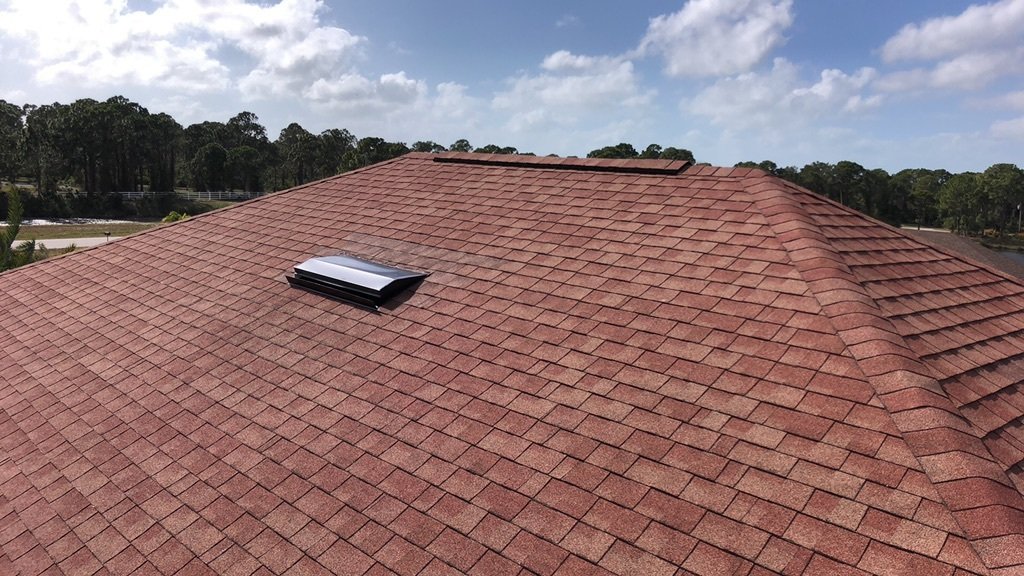
Florida roofs take a beating before any El Niño storm arrives: year-round UV exposure, daily heat cycles, humidity, and salt air in coastal communities from Longboat Key to Cape Coral. From the ground, look for missing, cracked, or curled shingles, cracked or slipped tiles, dark streaks, and shingle granules collecting in your gutters.
What you can’t see from the yard is usually the bigger problem. Flashing can loosen, sealant around vents and pipes can dry and crack, and the underlayment beneath tile can break down while the tile above still looks fine. Florida’s heat ages sealants faster than the label suggests. And storm rain doesn’t always fall straight down. Wind can drive water sideways under flashing and into seams, so the side of your home facing the weather takes the hardest hit.
If your roof hasn’t been inspected since the 2024 hurricane season, now is the time. Age matters too, and how long a roof lasts depends largely on its material. If yours is getting older, regular maintenance and a few targeted upgrades can add years to its life.
Catching minor issues now usually means a straightforward roof repair. By February, those same issues can let water into the decking underneath, and the fix gets bigger and more expensive.
Clean Gutters and Address Drainage
A roof in perfect shape can still let water in if the gutters can’t keep up. Overflow soaks the fascia, spills against the walls, and pools along the foundation. Clear out debris, flush the downspouts, look for sagging or separated sections, and extend downspouts so water empties well away from the house.
Southwest Florida adds its own complications. Landscaping often runs right up to the foundation, and palm fronds, mulch, and sandy soil can block drainage paths that look clear on the surface. The best test is simple: next time it pours, grab an umbrella and walk the perimeter to see where the water actually goes.
While you’re looking up, check your gutters, soffit, and fascia. In Florida’s humidity, these are often the first parts of a home to show moisture damage, and a damaged soffit gives wind-driven rain a direct path into the attic from below the roofline.
Check Siding, Stucco, and the Building Envelope
Stucco is everywhere in Southwest Florida, and it develops hairline cracks over time. In a normal year they’re cosmetic. After weeks of rain, they become channels for water. Check around windows, doors, and corners, look for bubbling or bulging that signals trapped moisture, and note any gaps where stucco meets trim. If you have vinyl or composite siding, look for loose or lifted panels.
Next, inspect window frames, door frames, and anything that penetrates the wall, such as utility lines, hose bibs, and outdoor outlets. Florida sun dries caulk out quickly, and a $10 tube now can prevent drywall damage later.
Prepare Your Household and Property
Hurricane prep usually means getting ready for a few bad days. This season calls for a different mindset: staying ready from November through March for repeated severe weather, possible tornadoes, power outages, and localized flooding.
Emergency Supplies, Tornado Plans, and Evacuation
Plan for a full week without trips to the store. The Insurance Information Institute recommends at least seven days of nonperishable food, one gallon of water per person per day, and your household’s medications, plus a “go bag” with essential supplies and documents in case you need to leave quickly. Add flashlights, batteries, and a large power bank. Keep copies of insurance cards, IDs, and some cash in the go bag.
Hurricanes give you days of warning. You watch the forecast cone, stock up, and decide whether to stay or leave. A tornado warning might give you minutes, and it can come in the middle of the night. The Siesta Key tornado struck just after 3 a.m. That’s why tornadoes need their own plan. Pick your safe spot now: an interior room or closet on the lowest floor, away from windows. If you live in a manufactured home, decide in advance where you’ll go when a warning is issued, because those homes are not safe places to ride out a tornado. And make sure something will wake you. A NOAA weather radio keeps you updated even if the power goes out, and you should turn on emergency alerts in your phone’s settings.
Finally, know your evacuation zone. Florida counties assign zones in advance, and you can look yours up through the state’s Know Your Zone tool. If you have a pool, don’t drain it before heavy rain. An empty pool can shift or lift in saturated ground.
Trim Trees and Secure Your Yard
Tree and debris damage from high winds is common across many regions, and it’s also one of the most preventable problems. Trim dead palm fronds and any branches hanging over the roof. Bring in or tie down patio furniture, planters, and anything else that could catch the wind. It’s cheap, it’s quick, and it eliminates some of the most common storm claims.
Protect Your Florida Home Before El Niño Arrives
After securing insurance, nothing on this list is more important than having a professional look at the entire exterior at once: the roof, gutters, soffit, fascia, siding, and stucco. You get a prioritized list of what to fix before winter and a dated record of your home’s condition for your insurance file.
Anthony C. Leonard Roofing has been protecting Florida homes since 1980. As a third-generation, family-owned roofing company, the Leonard family has worked through every major Southwest Florida storm of the past 46 years, and they serve homeowners from Tampa and Bradenton through Sarasota, Venice, Englewood, Port Charlotte, Punta Gorda, Fort Myers, Cape Coral, and Naples. ACL Roofing is a GAF Master Elite contractor, a factory certification GAF reserves for a small share of roofing contractors, and every project is backed by a leak-free guarantee and a 20-year workmanship warranty, with $0 deposit required: you pay when the job is done right. ACL Roofing has earned a 4.9-star rating across more than 327 verified reviews.
Already dealing with a leak or storm damage? ACL Roofing offers emergency roof repair, with a rapid response focused on keeping water out of your home and limiting interior damage.
Request your free estimate or call (941) 474-3533 to schedule an inspection before the first El Niño storm arrives.
Sources:
NOAA Climate Prediction Center. ENSO Diagnostic Discussion. https://www.cpc.ncep.noaa.gov/products/analysis_monitoring/enso_advisory/ensodisc.shtml
TIME. How Should You Prepare for a Super El Niño? https://time.com/article/2026/08/31/how-to-prepare-super-el-nino/
Newsweek. How Millions of Homeowners Should Prepare for ‘Supersized’ El Niño This Winter. https://www.newsweek.com/how-millions-of-homeowners-should-prepare-for-supersized-el-nino-this-winter-12404435
Florida Climate Center, Florida State University. El Niño Outlook. https://climatecenter.fsu.edu/products-services/summaries?view=category&id=114
Tampa Bay Times. Strongest El Niño Ever? What That Means for Florida’s Hurricane and Winter Seasons. https://www.tampabay.com/news/environment/2026/09/17/el-nio-winter-weather-hurricane-tornado/
National Weather Service Tampa Bay. Developing El Niño Expected to Impact Florida’s Weather. https://www.weather.gov/media/tbw/Observer/fall2018.pdf
National Association of Home Builders. National Flood Insurance Program Extended Through Dec. 11. https://www.nahb.org/blog/2026/09/nfip-extension
FEMA. Congressional Reauthorization for the National Flood Insurance Program. https://www.fema.gov/flood-insurance/rules-legislation/congressional-reauthorization
Share this post
Get Your Free Estimate!
Call now for expert roofing services.


